Description
In a context of real-estate crisis, traditional models of housing and urban growth must be reconsidered. Many paradigms have become obsolete, and it is necessary to formulate strategies that respond to a more moderate economic pace than that of recent decades. In contrast to the model based on public funding through competitions to produce low-cost, quickly built housing, a more flexible system is proposed, capable of balancing the interests of the city council, the developer and the end user.
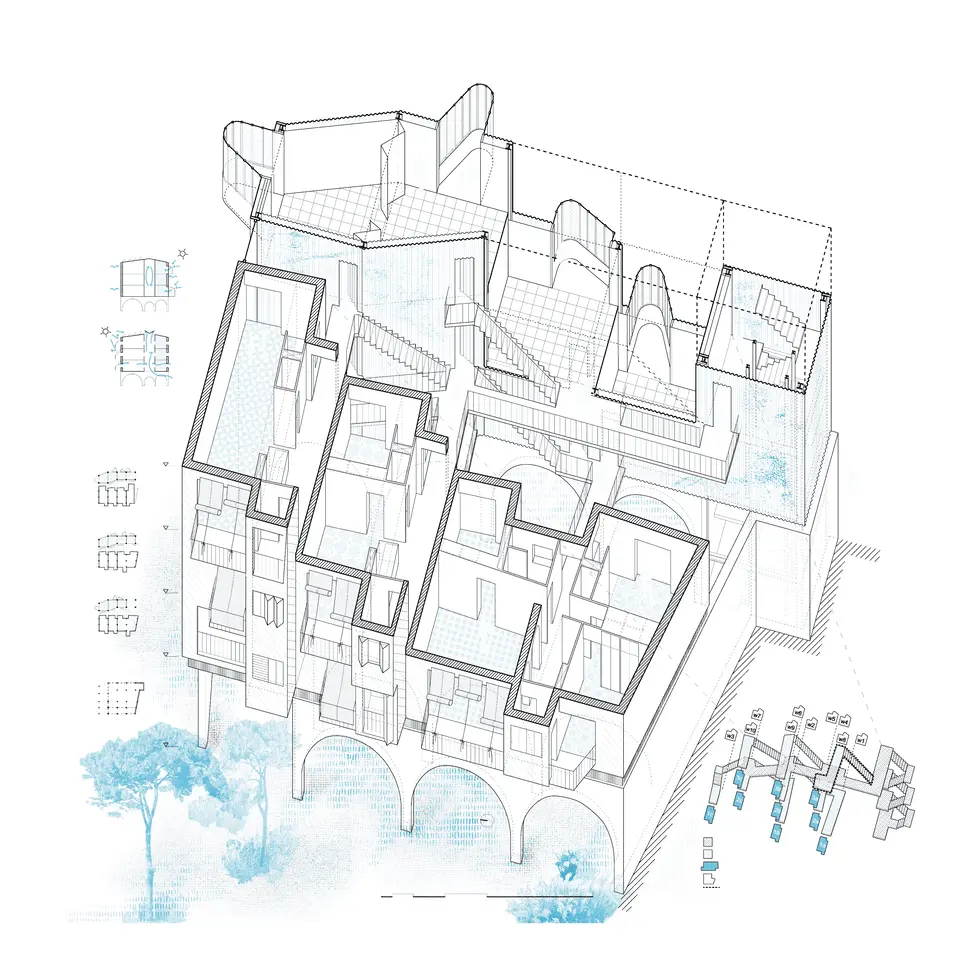
The strategy proposes an evolutionary, rather than static, urban development capable of adapting to social and economic changes. To this end, a public office is created to review regulations and evaluate the overall impact of each intervention. The city council assumes an initial active role: it prepares the land, executes the foundations, the ground floor and the service connections, and builds a plinth-square for public use. Subsequently, the developer constructs most of the building, reducing their initial investment. The dwellings are marketed without interior finishes, allowing buyers to personalize layout and quality, and lowering the final price.
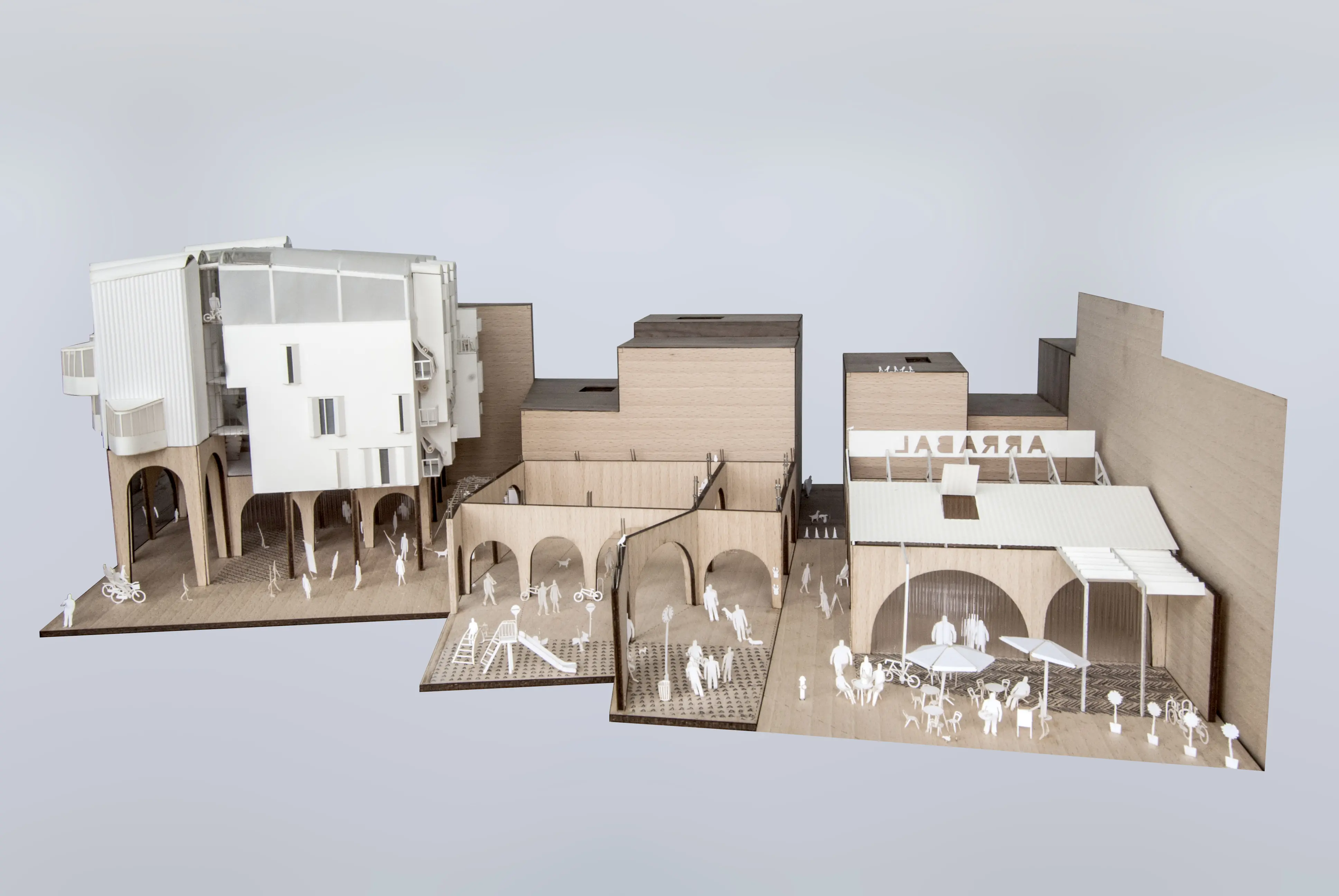
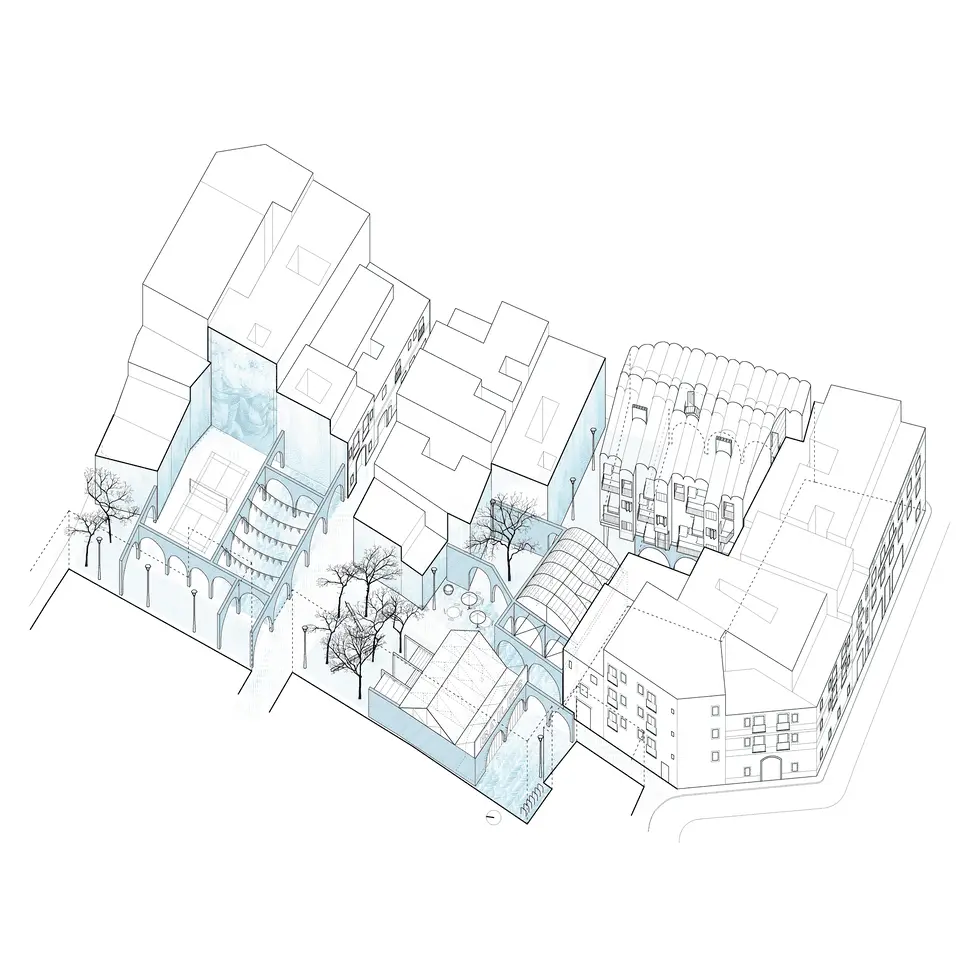
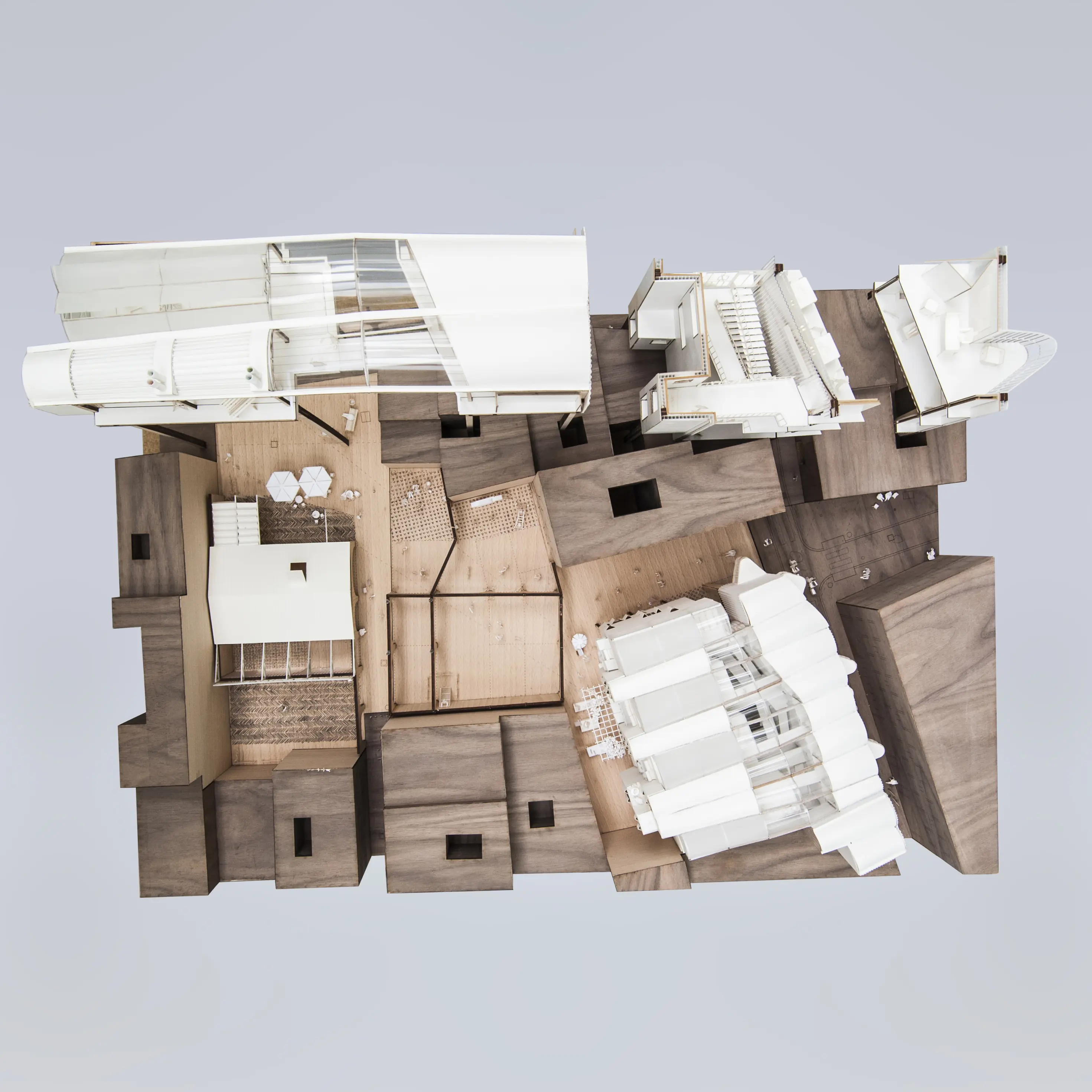
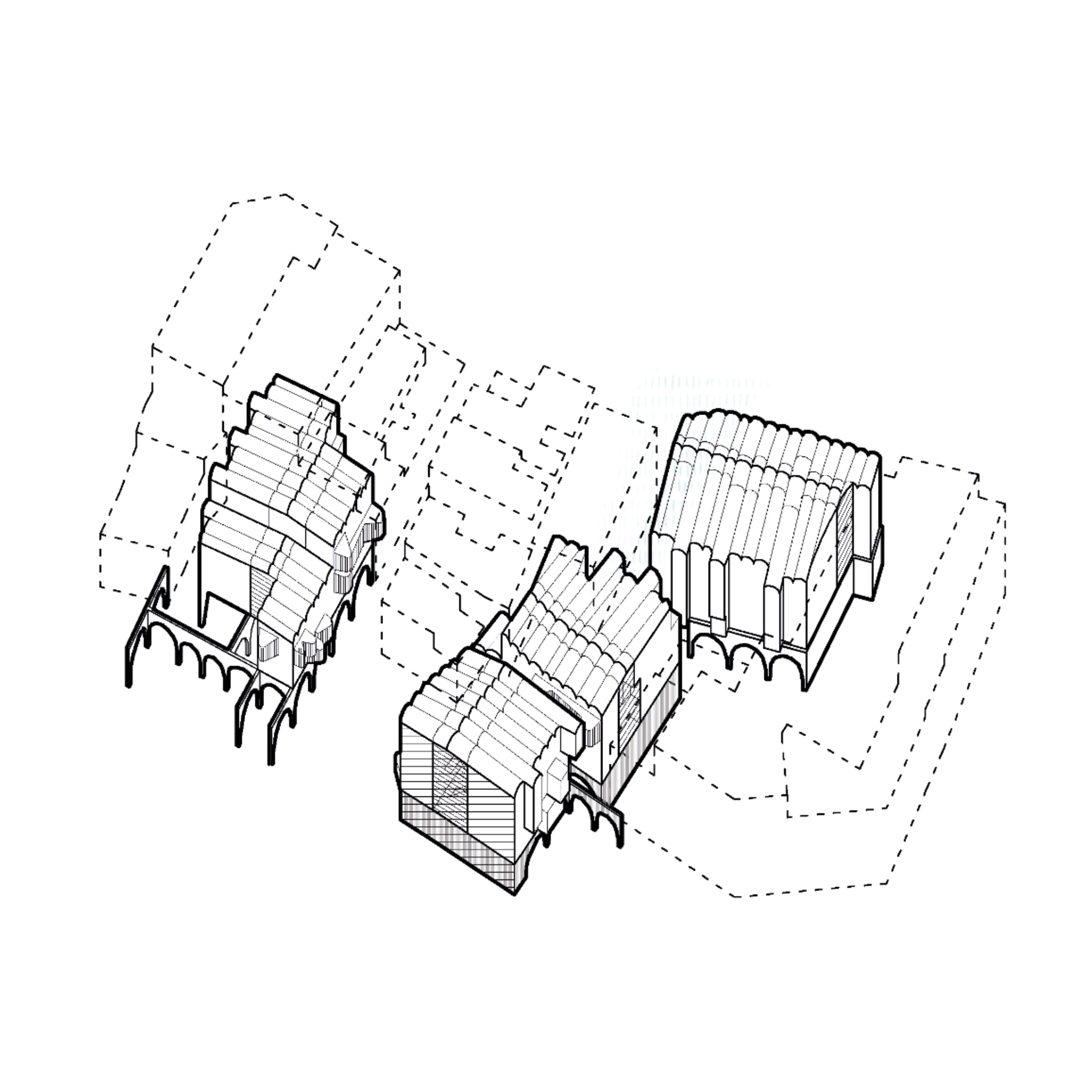
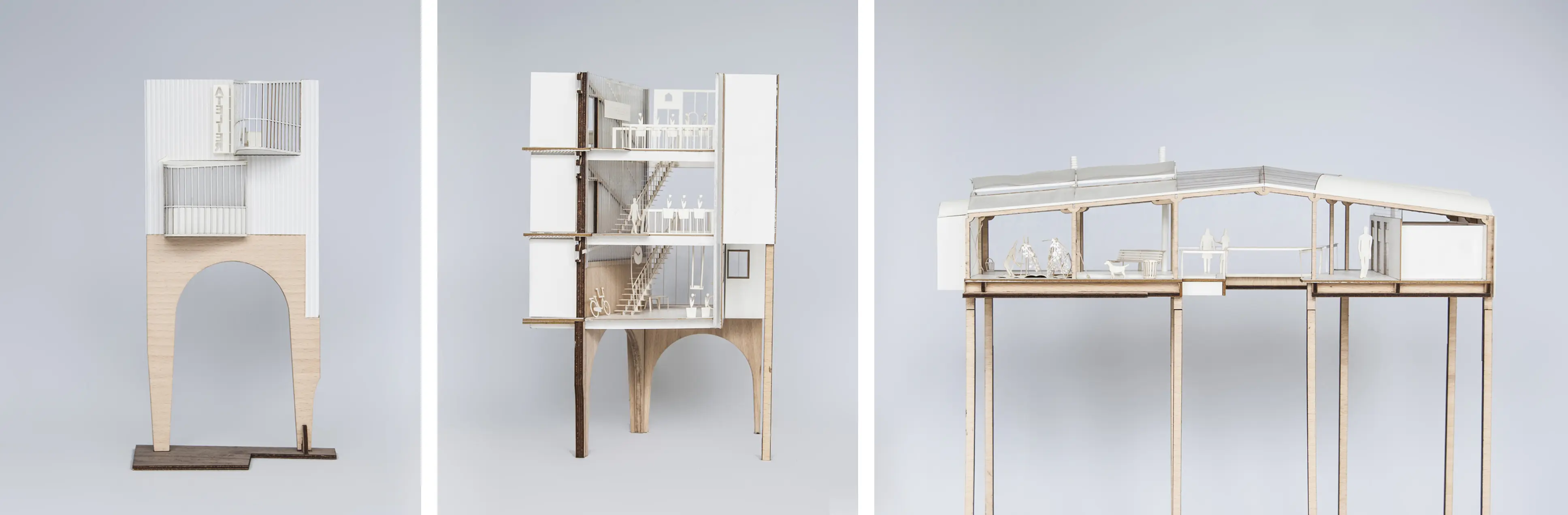
The tactic is articulated around the plinth-square, a public infrastructure that acts as a structural base and support for future private developments. Building programs with variable licenses are placed on top of it, facilitating urban reconfiguration. Elements such as galleries, common spaces, super-courtyards and large balconies reinforce the transition between public and private.
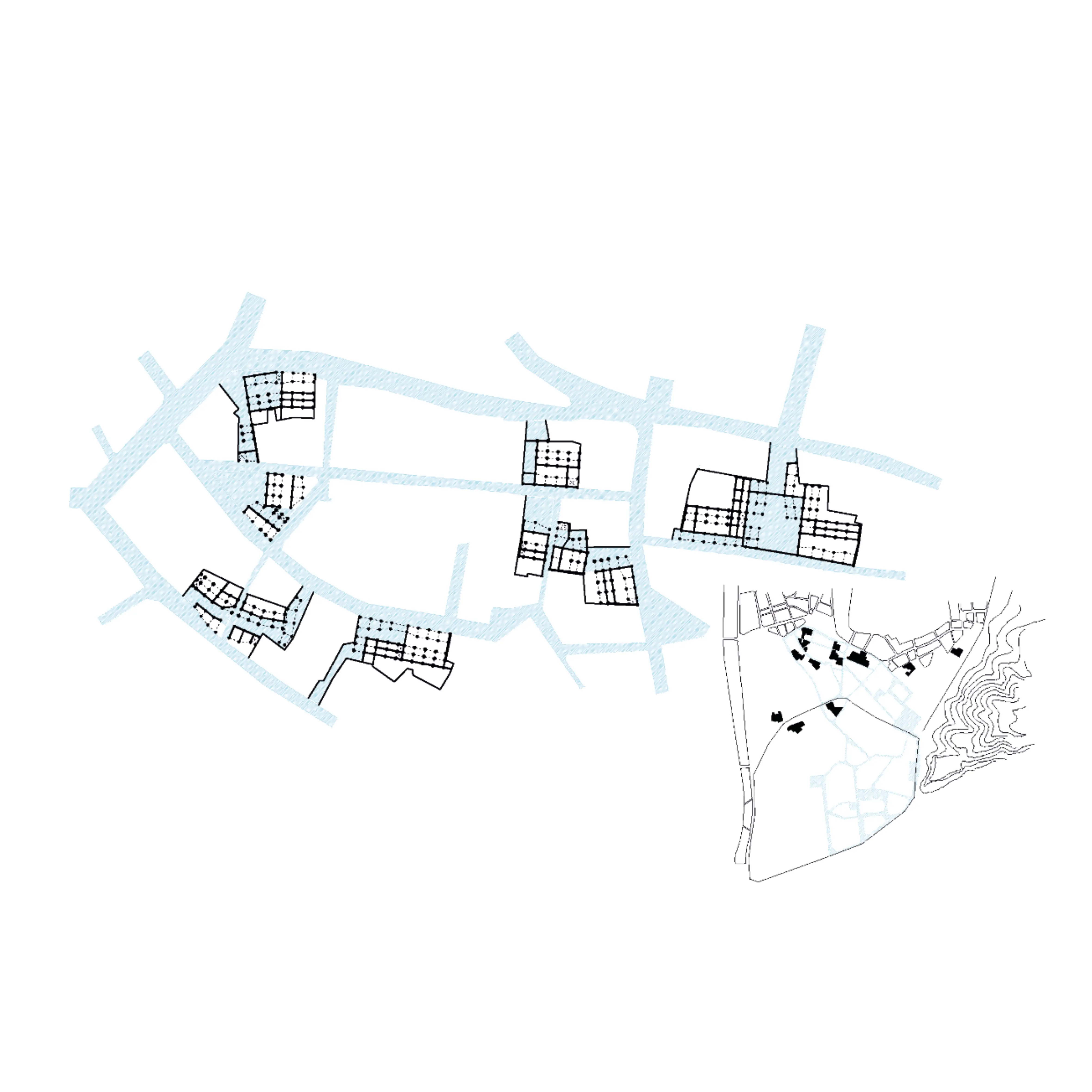
The model is applied especially in arrabales, intermediate areas between the historic center and the expansion districts. The plots subject to intervention are parcels left vacant during the 2008 crisis. To prevent them from remaining as residual walled-off spaces, their reconversion into public space is proposed, generating a porous urban fabric with new plazas for collective use that, in many cases, connect different streets through these courtyard-squares, revitalizing and expanding the consolidated city.