Description
The current condition of dehesa ecosystems brings the issue into focus around the management of natural resources that can make this territory habitable and productive without exhausting it.
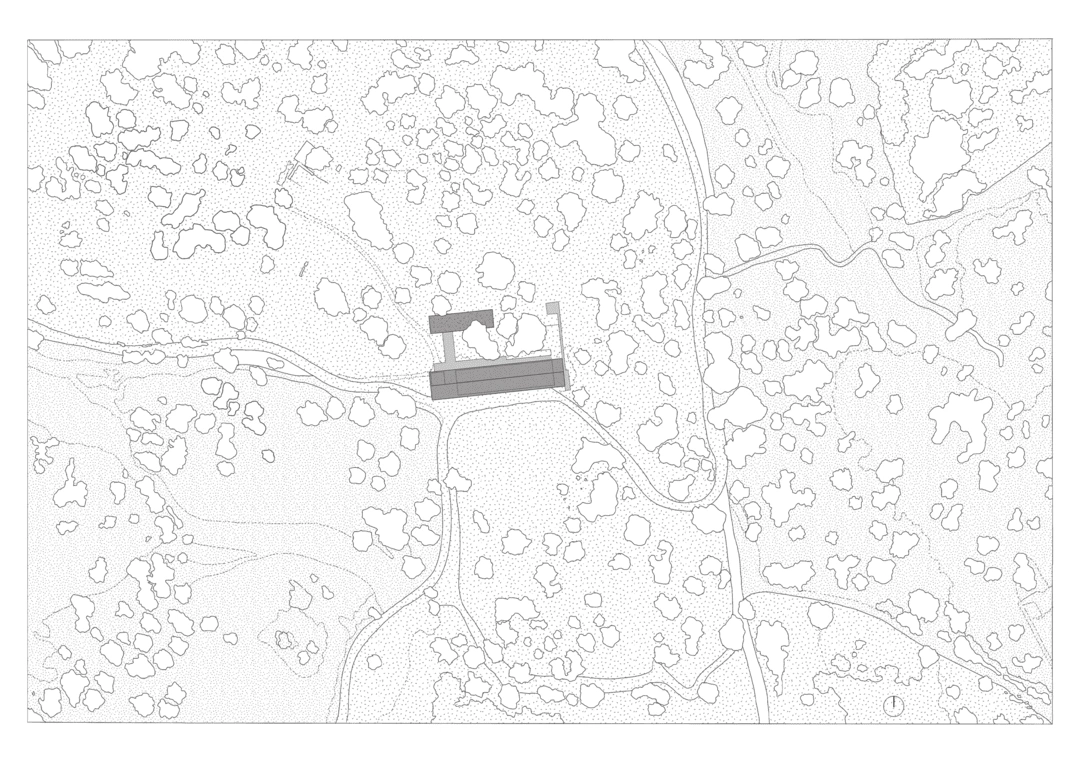
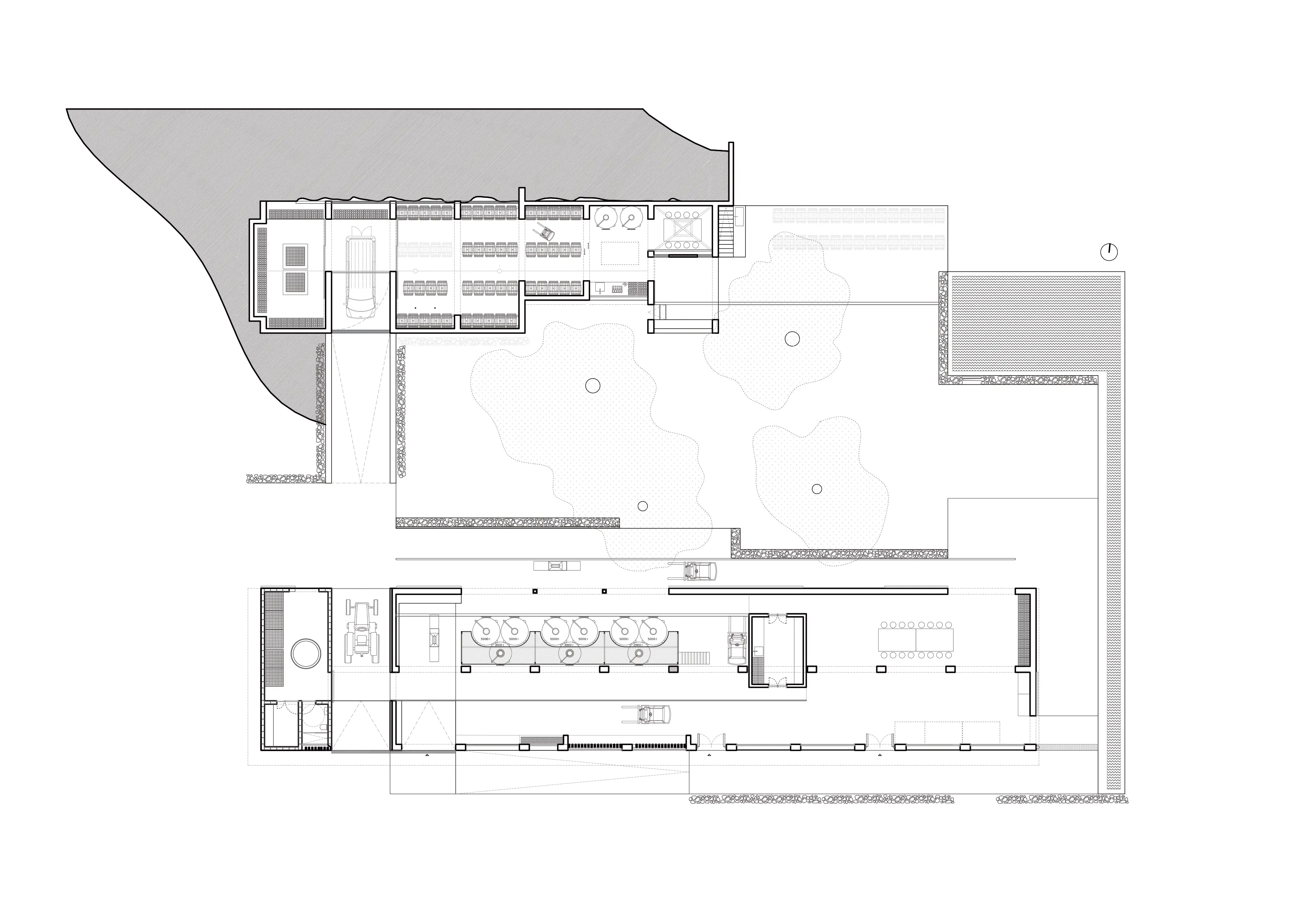
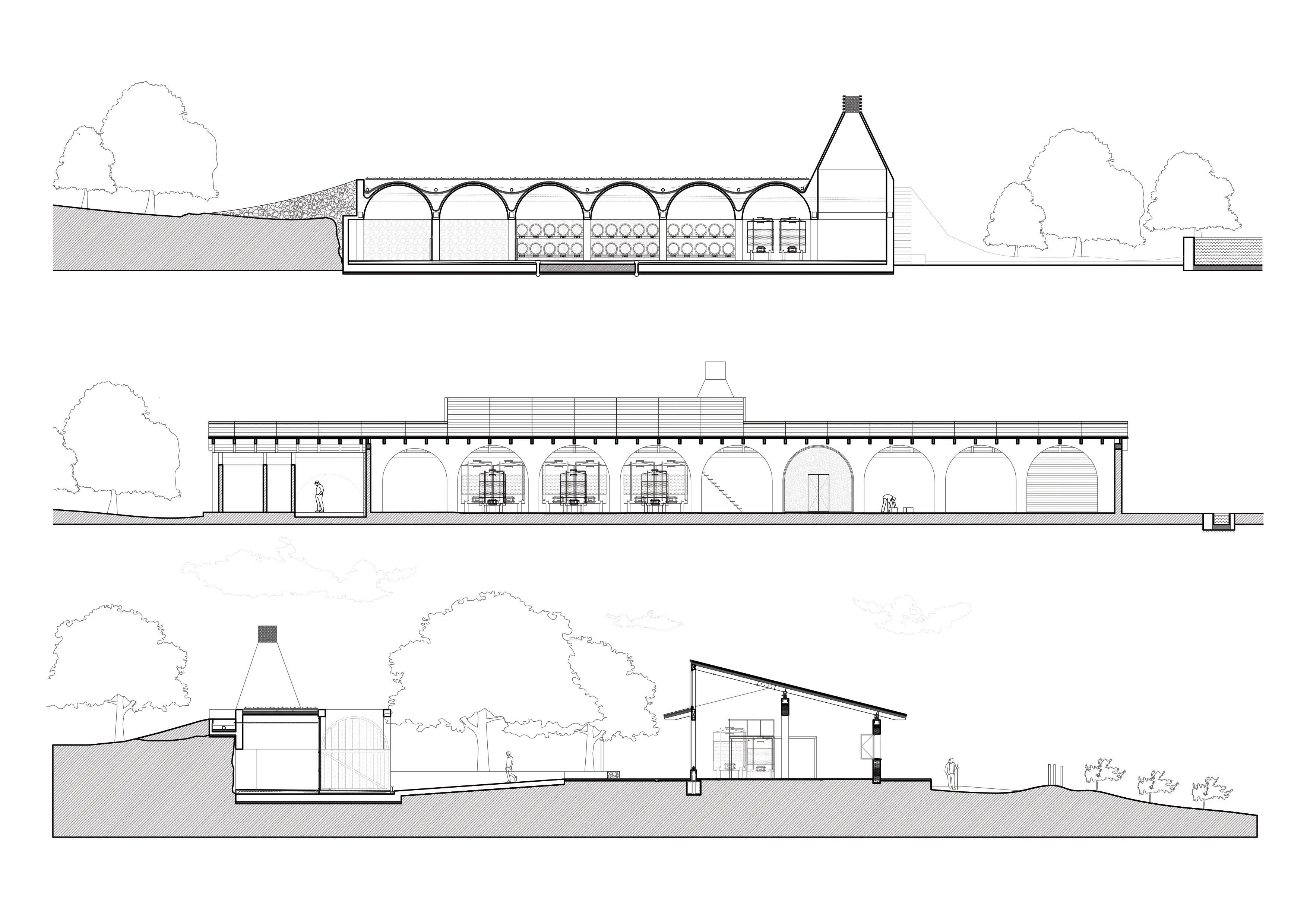
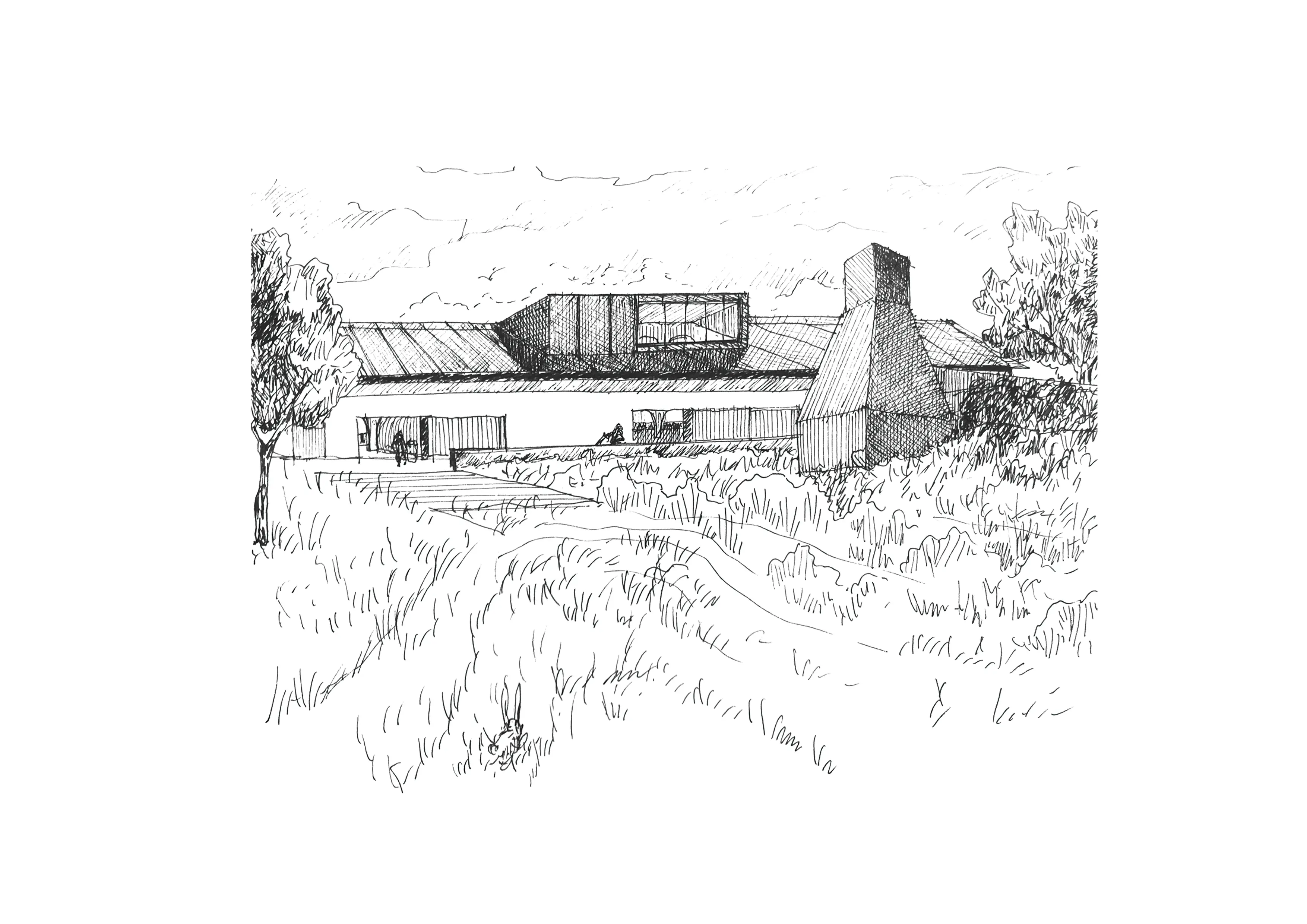
In this context, the project seeks to insert a wine-producing infrastructure that enters into dialogue with the site and minimizes interference with the pre-existing environmental conditions. For this reason, the former stables are taken as the main field of intervention, and a semi-buried extension is proposed in order to avoid competing volumetrically with the landscape of holm oaks.
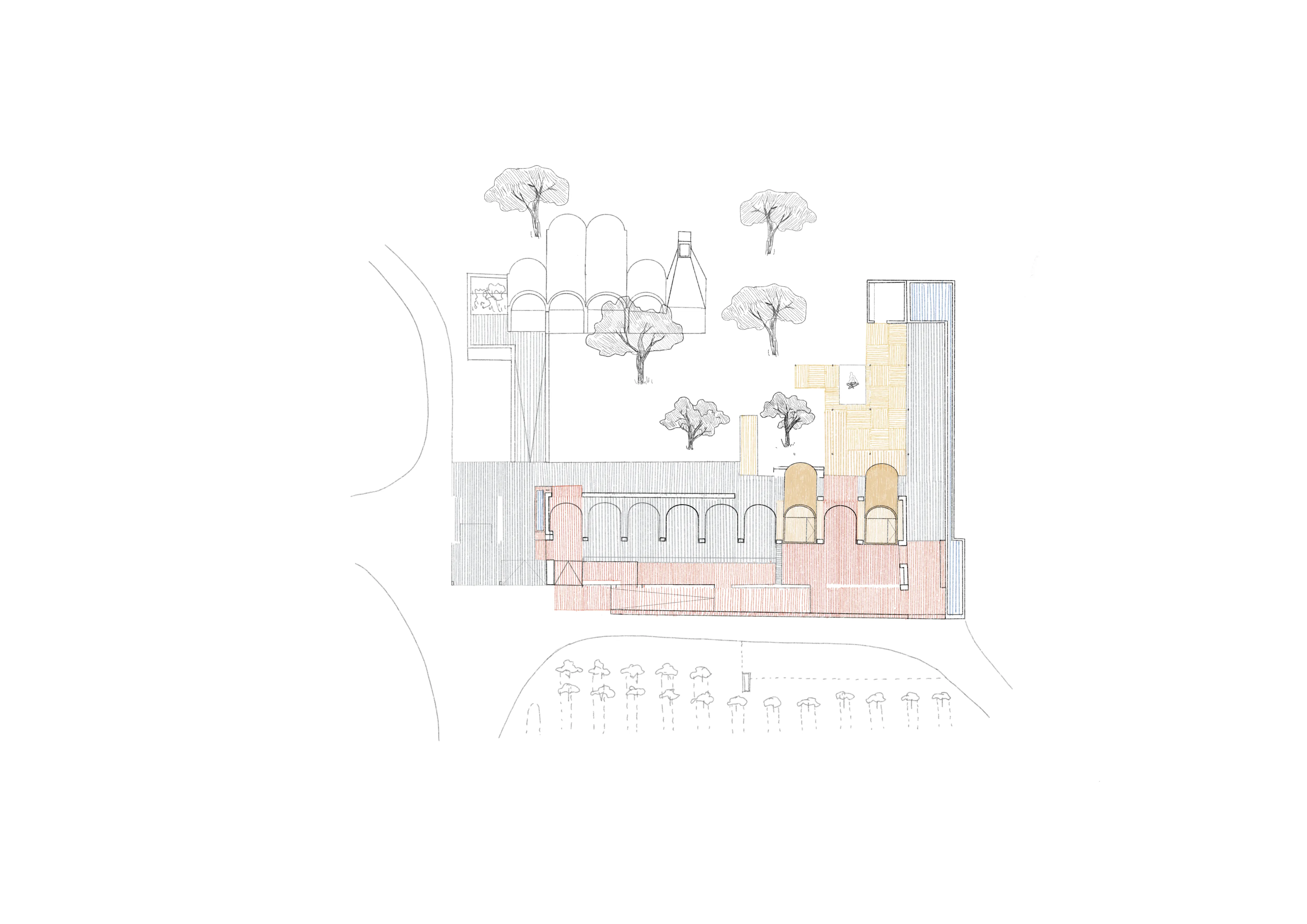
Thus, the section becomes the project’s fundamental design tool: in the existing structure, the new roof profile increases the clear height required to operate the fermentation tanks through the incorporation of a large skylight that introduces controlled lighting and ventilation; in the extension, which connects to the main nave through a gently sloping exterior ramp, the structural and spatial requirements for barrel storage and maintenance are resolved through a system of barrel vaults.
The climatic strategy relies on passive mechanisms such as the extension of the southern eave of the new roof, the creation of northern openings that enhance cross-ventilation, and the arrangement of an evaporative cooling system through ceramic lattice screens.
The buried volume benefits from the thermal inertia of the ground and, together with a wind tower rising above the landscape to harness the prevailing air currents, reduces energy demand and stabilizes the hygrothermal conditions of the aging area.