Description
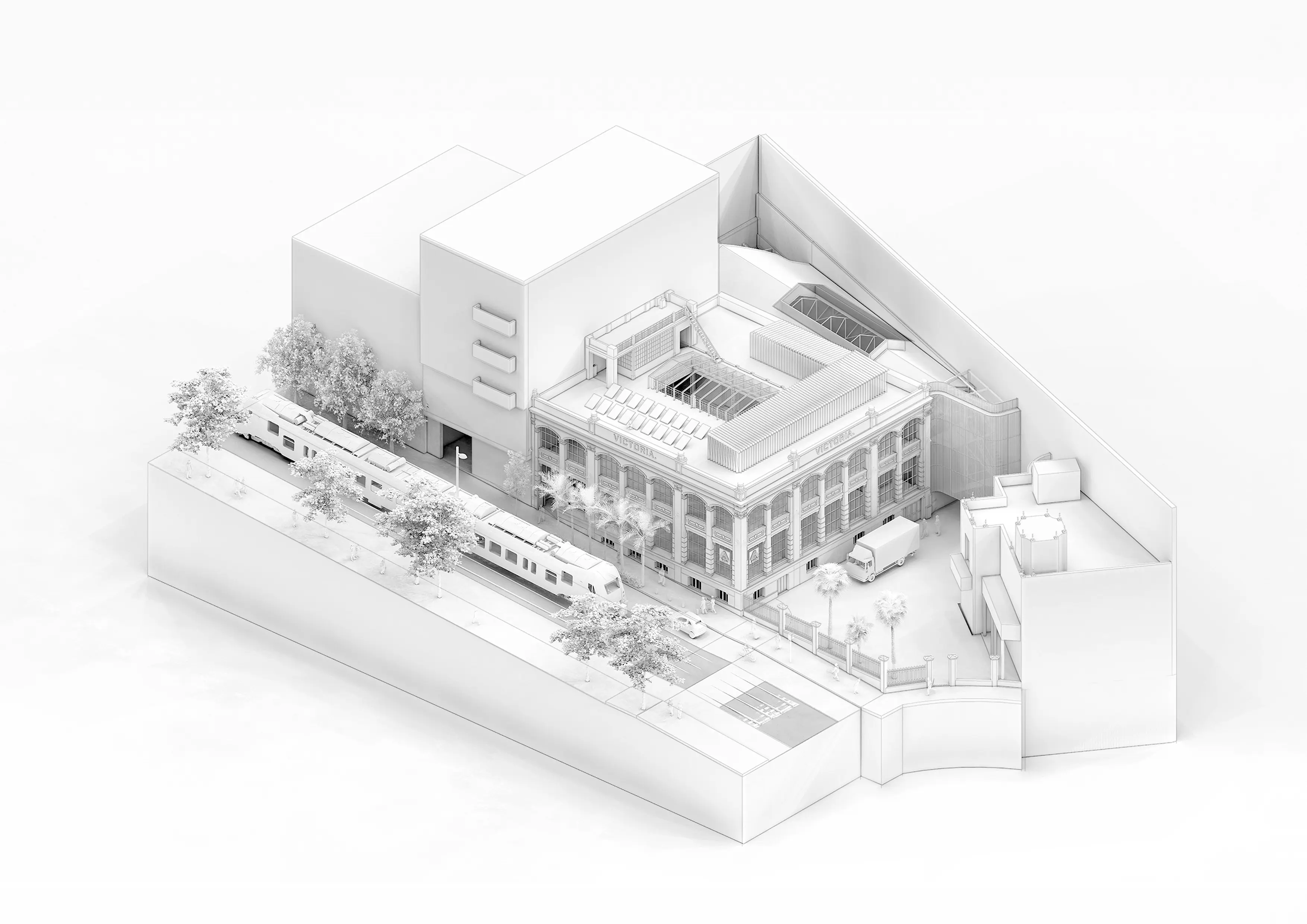
The former Fábrica de Tabacos and the Cinema Victoria are part of a significant episode in the urban architecture of Santa Cruz de Tenerife. After both activities closed in the 1970s, the complex remained abandoned for more than half a century, subjected to progressive deterioration that threatened to erase a relevant fragment of the city’s memory.
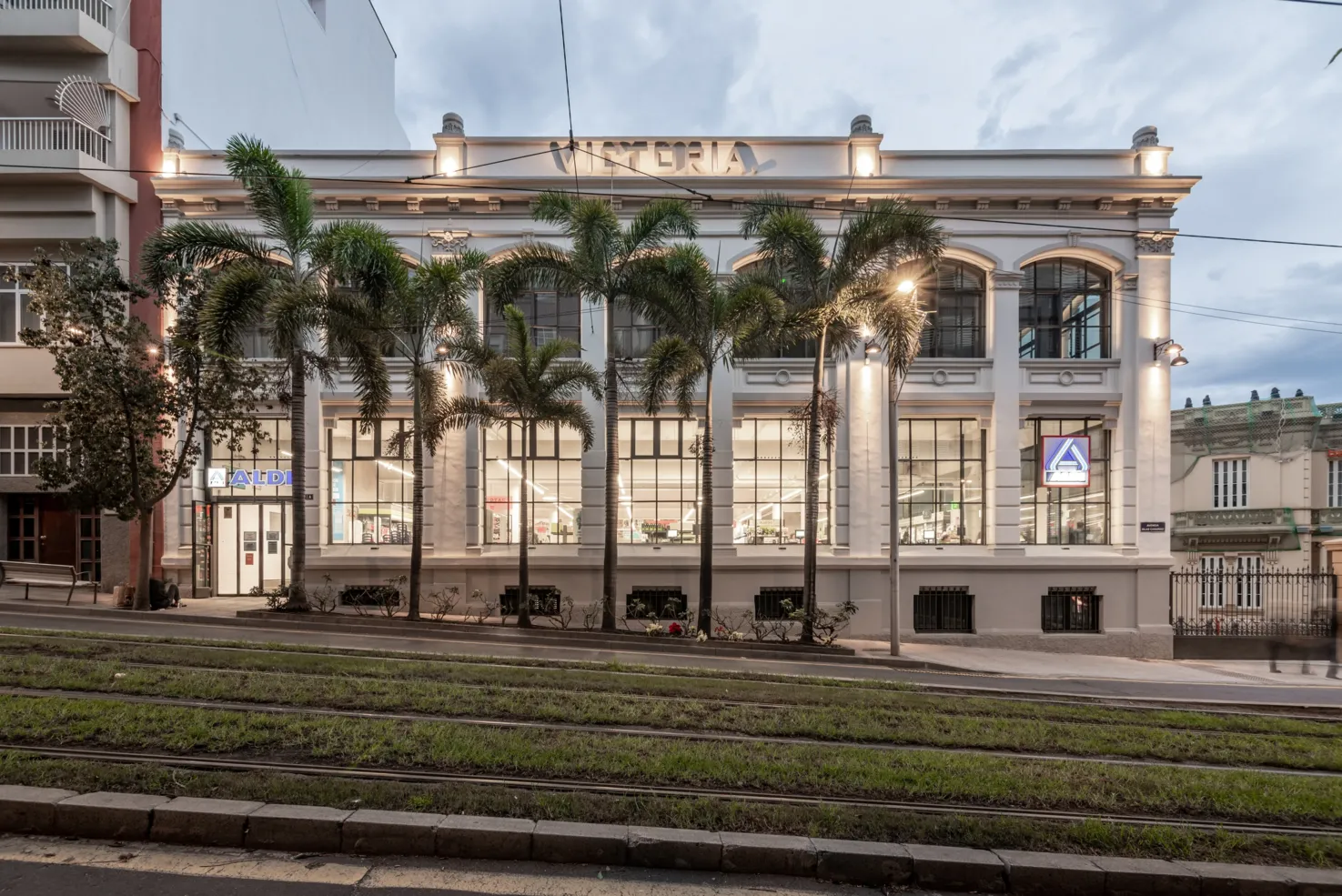
The intervention approaches its recovery through the preservation of the building’s industrial character and of the elements that define its architectural identity. The façades have been restored, recovering moldings, capitals and cornices through sober chromatic treatments, while the industrial laminated-steel carpentry has been rehabilitated with the incorporation of new high-performance glazing. Likewise, the historic “Victoria” signs have been reinstated, returning part of the ensemble’s original urban presence.
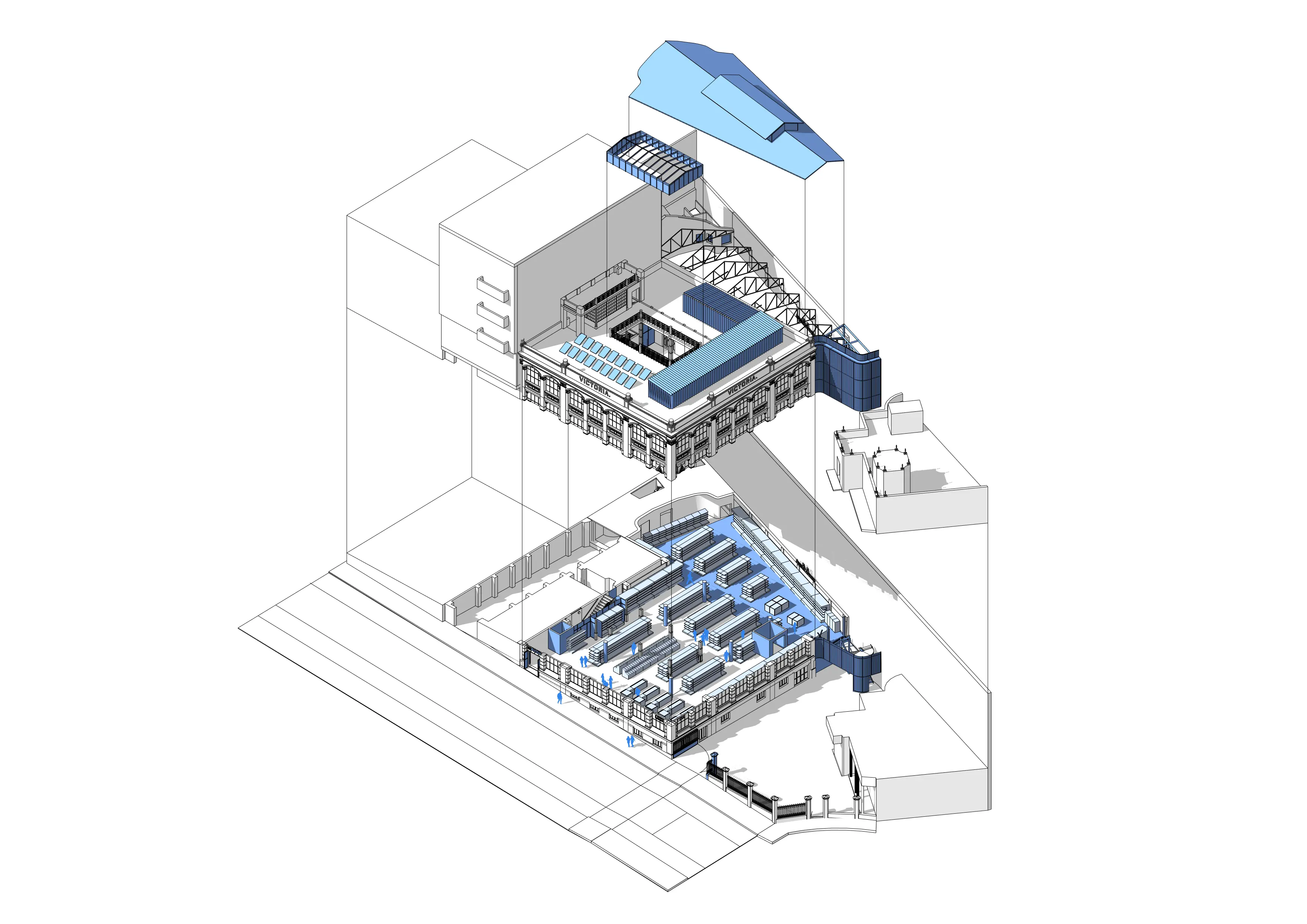
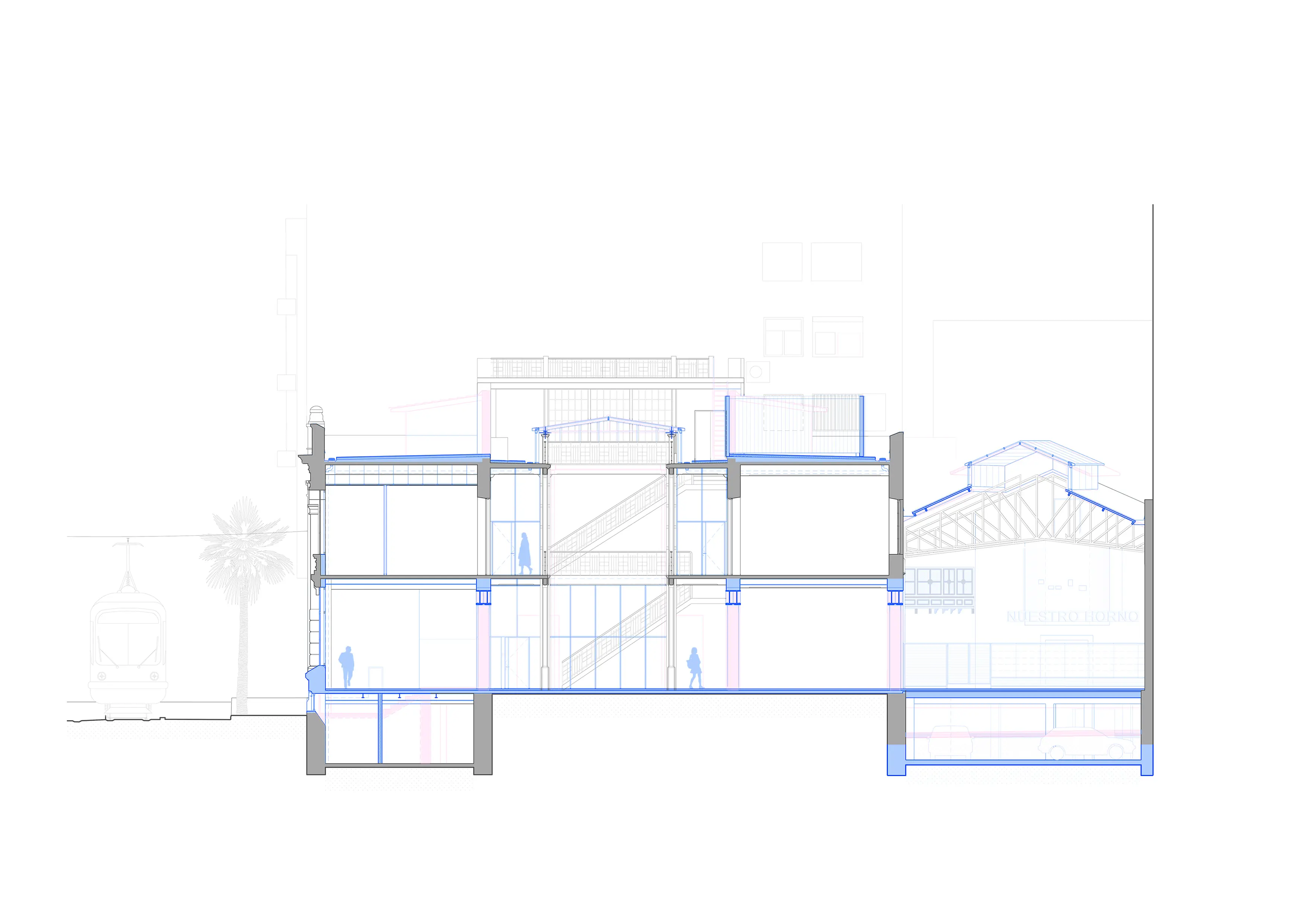
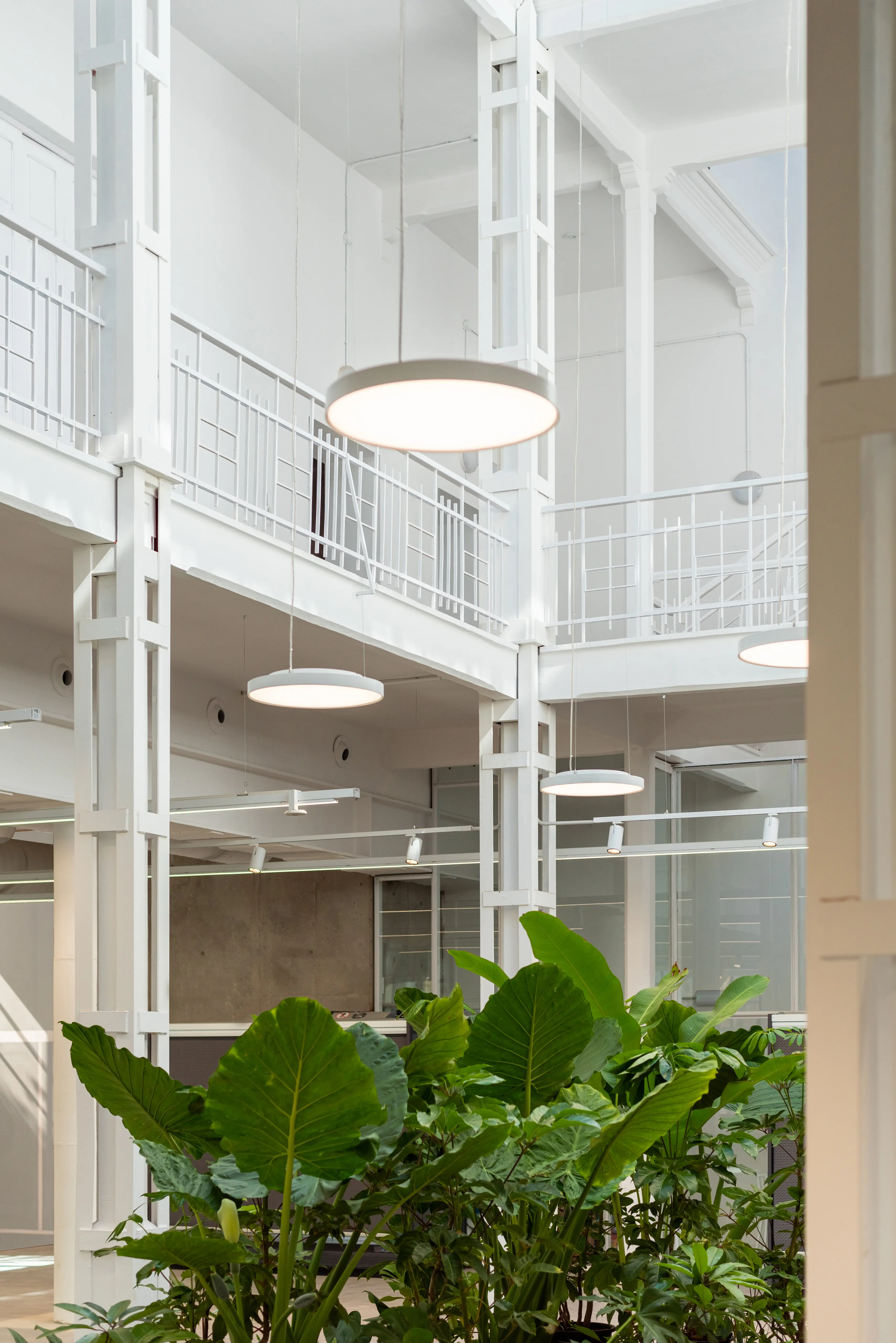
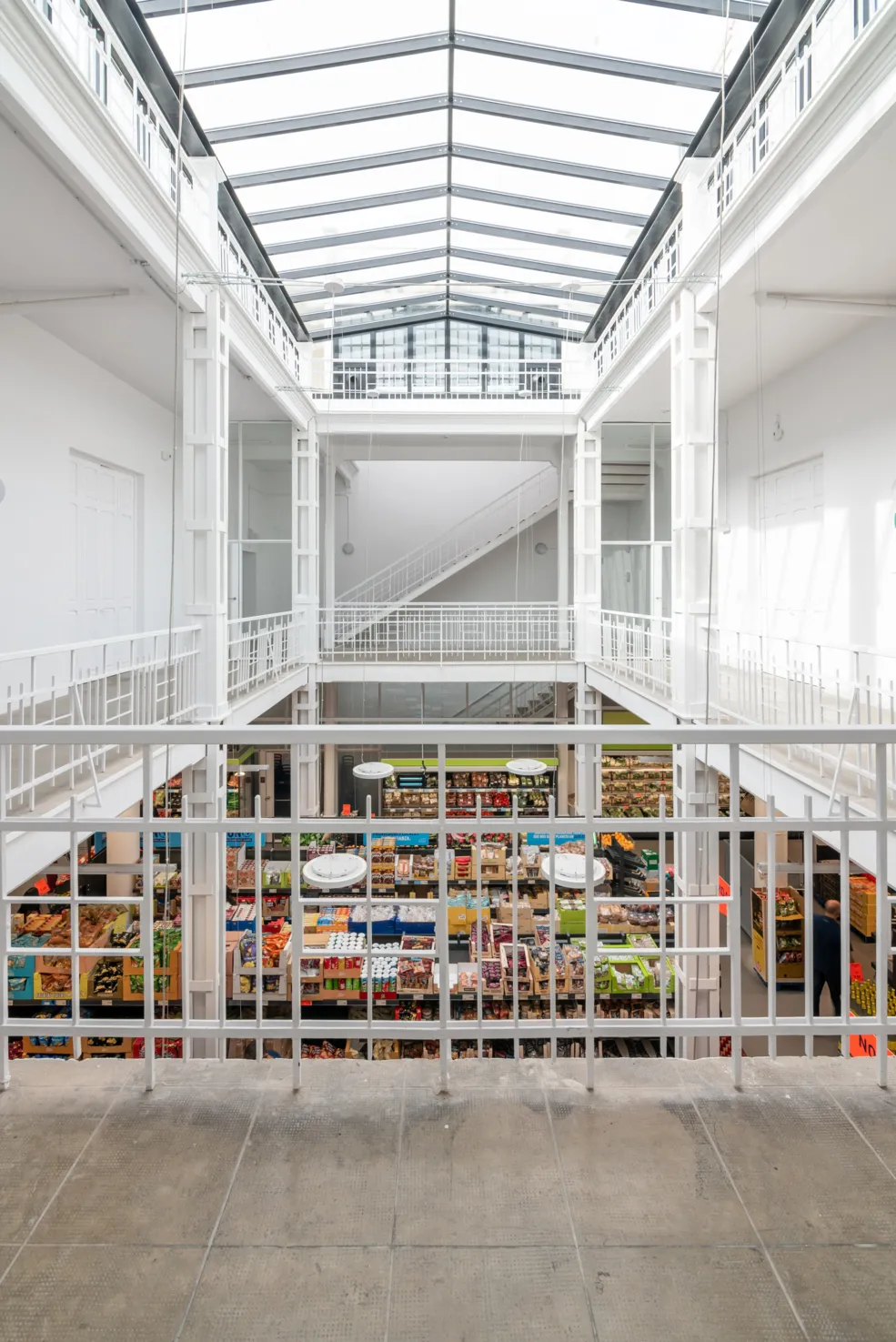
The interior is organized around the factory’s former atrium, recovered in its original configuration as the central space of the building. Its perimeter galleries, cast-iron railings and wooden carpentry configure a luminous vertical void that articulates circulation and relationships between floors.
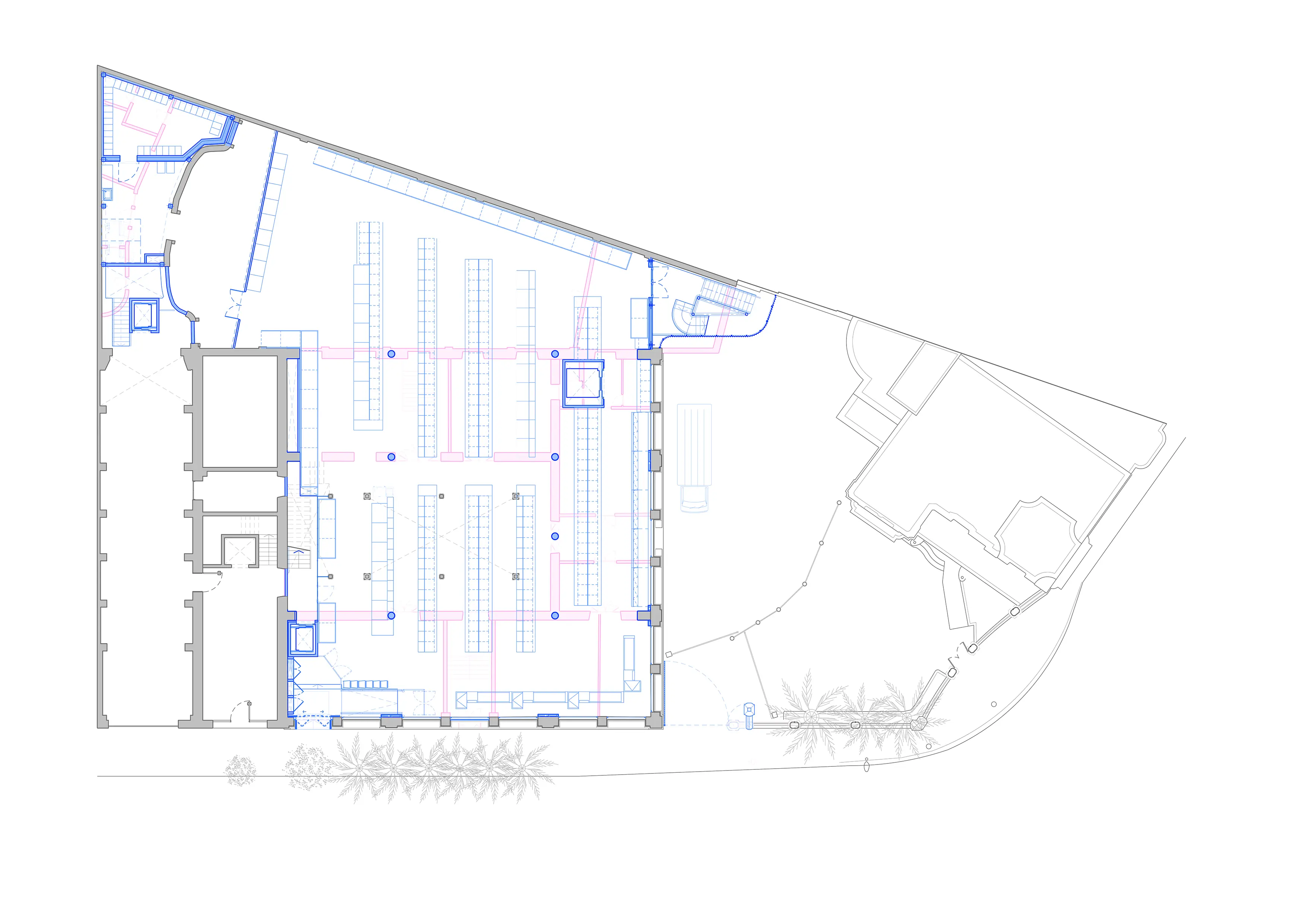
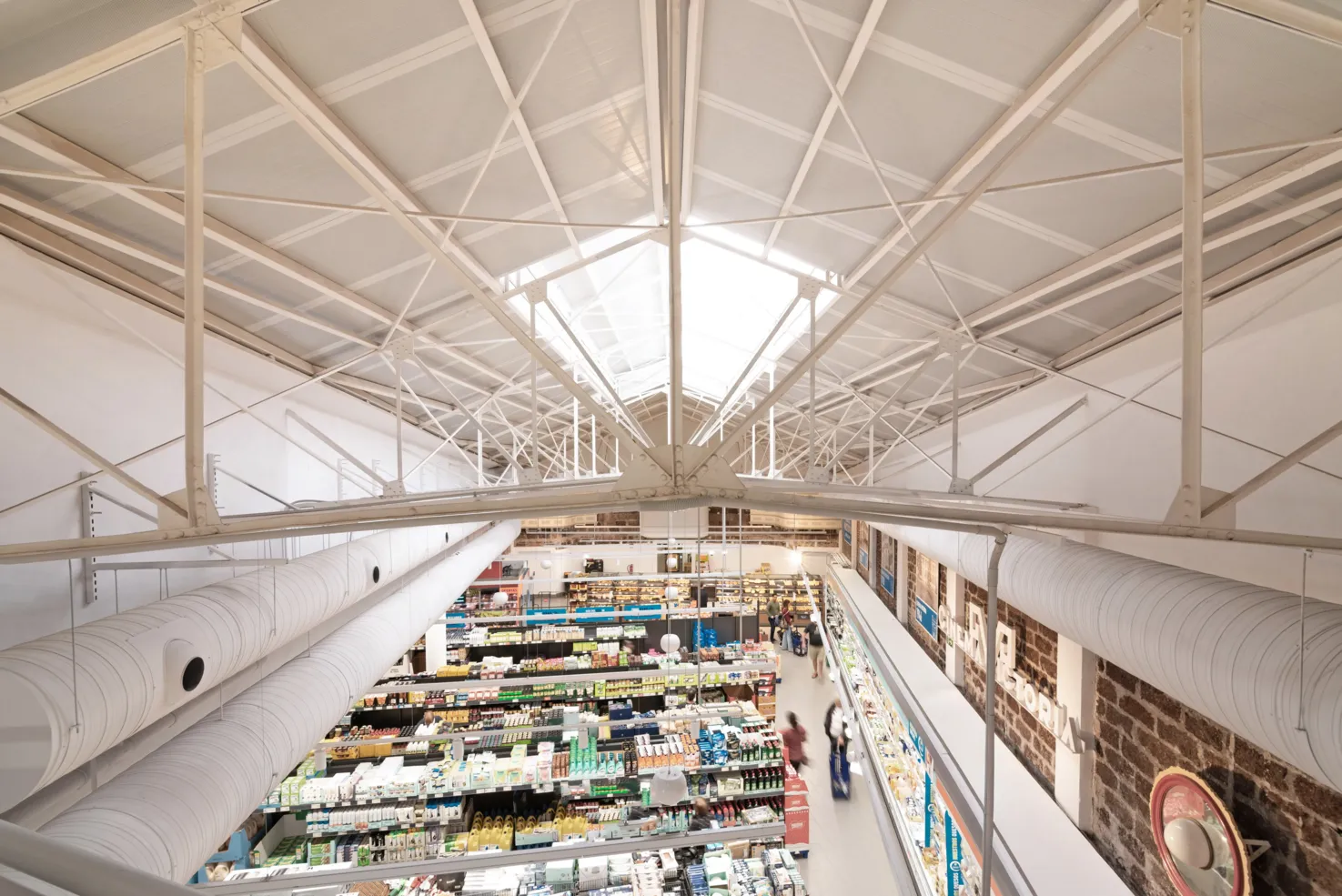
In order to introduce the new program, it was necessary to clear the ground floor through the insertion of large steel beams, while keeping the upper levels intact in their configuration. Commercial use is thus inserted into the existing spatial logic: the everyday act of shopping unfolds around the atrium and beneath the large cinema nave, where the scale of the space, the natural light and the materiality transform an ordinary gesture into a singular spatial experience.
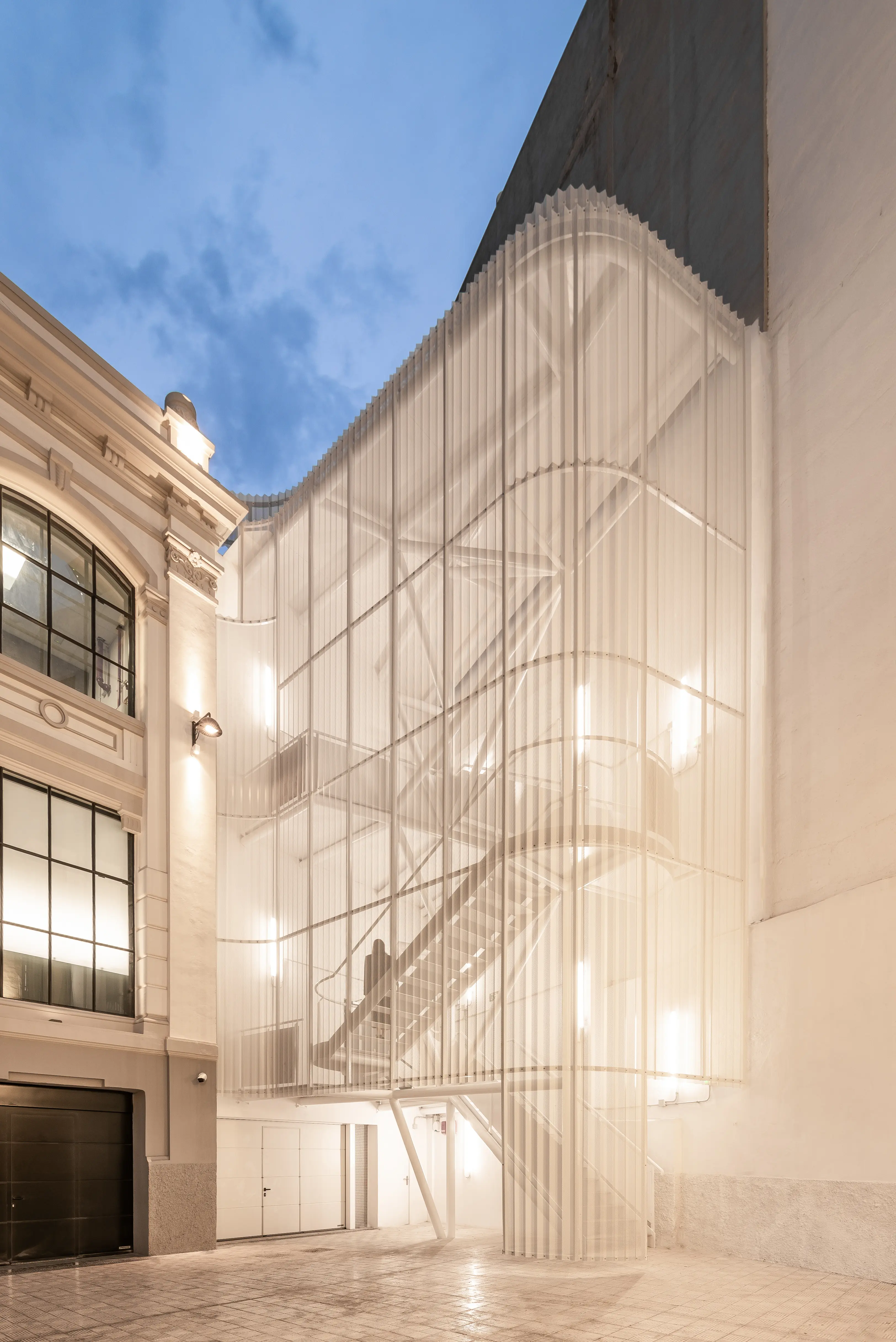
In the former cinema, the curved wall of the screening room has been preserved, built in red volcanic tuff masonry, now visible as the backdrop to the workshop. Alongside the historic façade, a new lightweight evacuation staircase wrapped in a semi-transparent skin introduces a contemporary presence that dialogues with the inherited architecture.