Description
In 1962, Aldo Van Eyck argued that the city should incorporate a network of “play apparatuses” integrated into urban furniture, understanding children’s play as a structural need rather than a residual one. His playgrounds did not belong only to children, but constituted spaces for everyone. This reflection serves as a starting point for rethinking Conde Duque through a child’s gaze: forgetting its condition as a building and discovering it instead as an immense landscape, a rhythmic forest of pillars and arches.
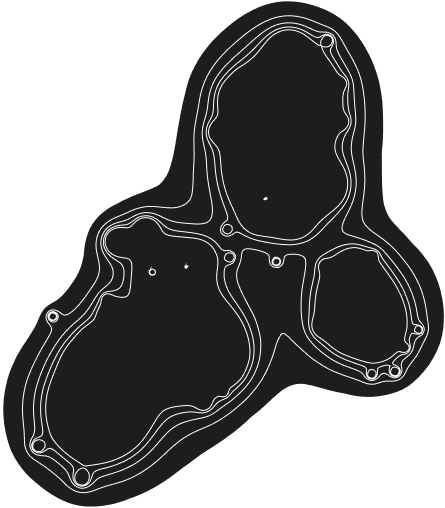
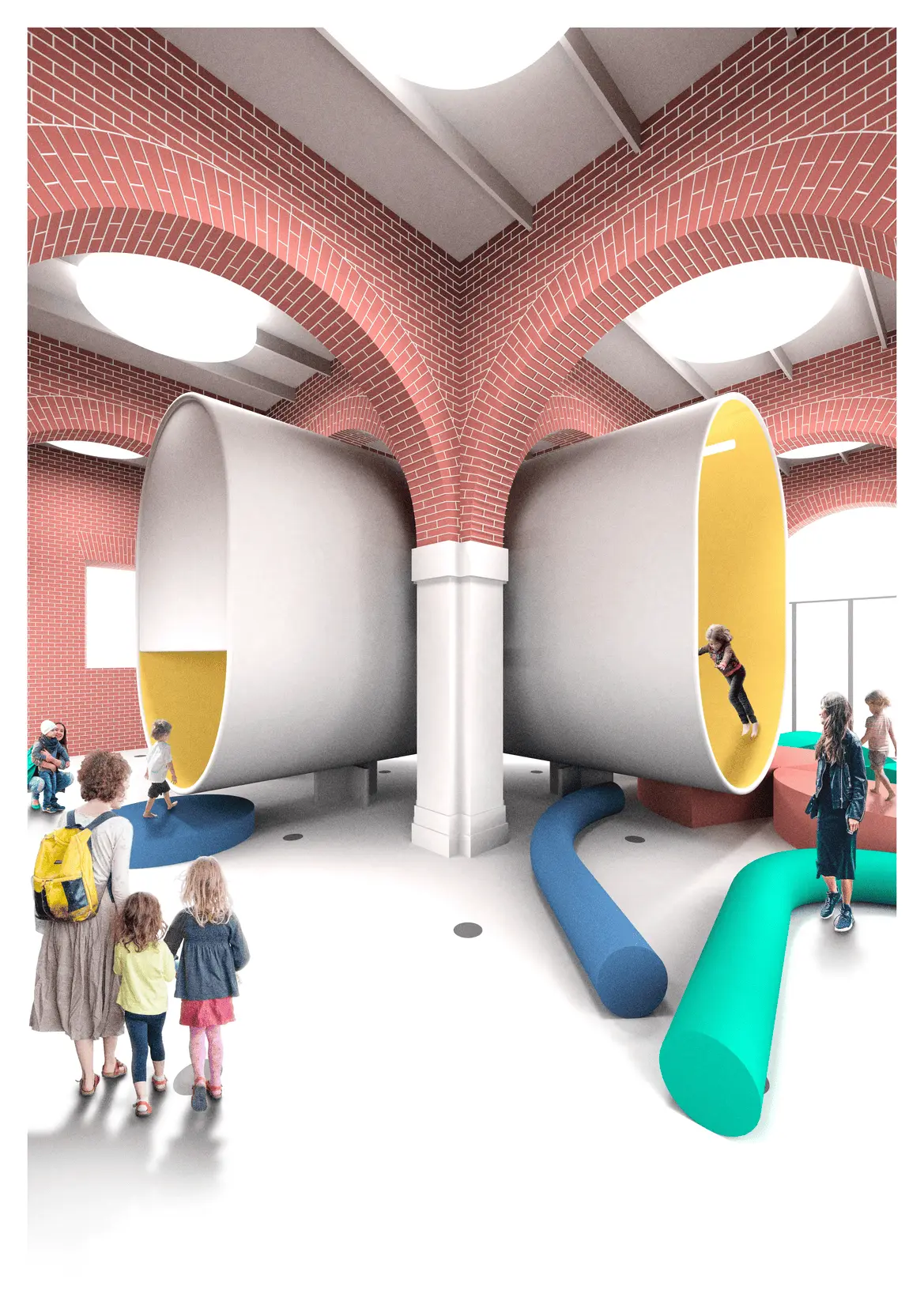
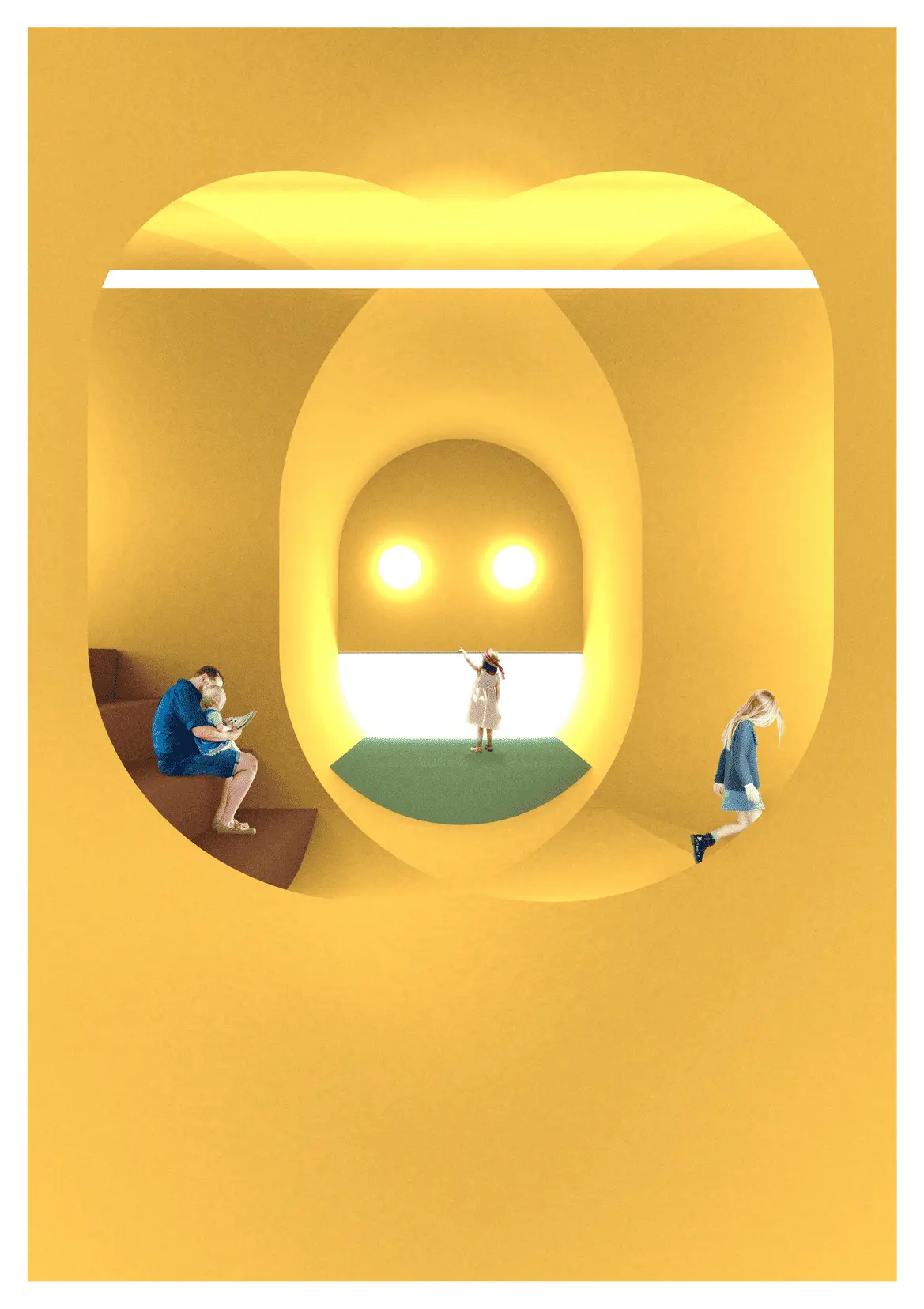
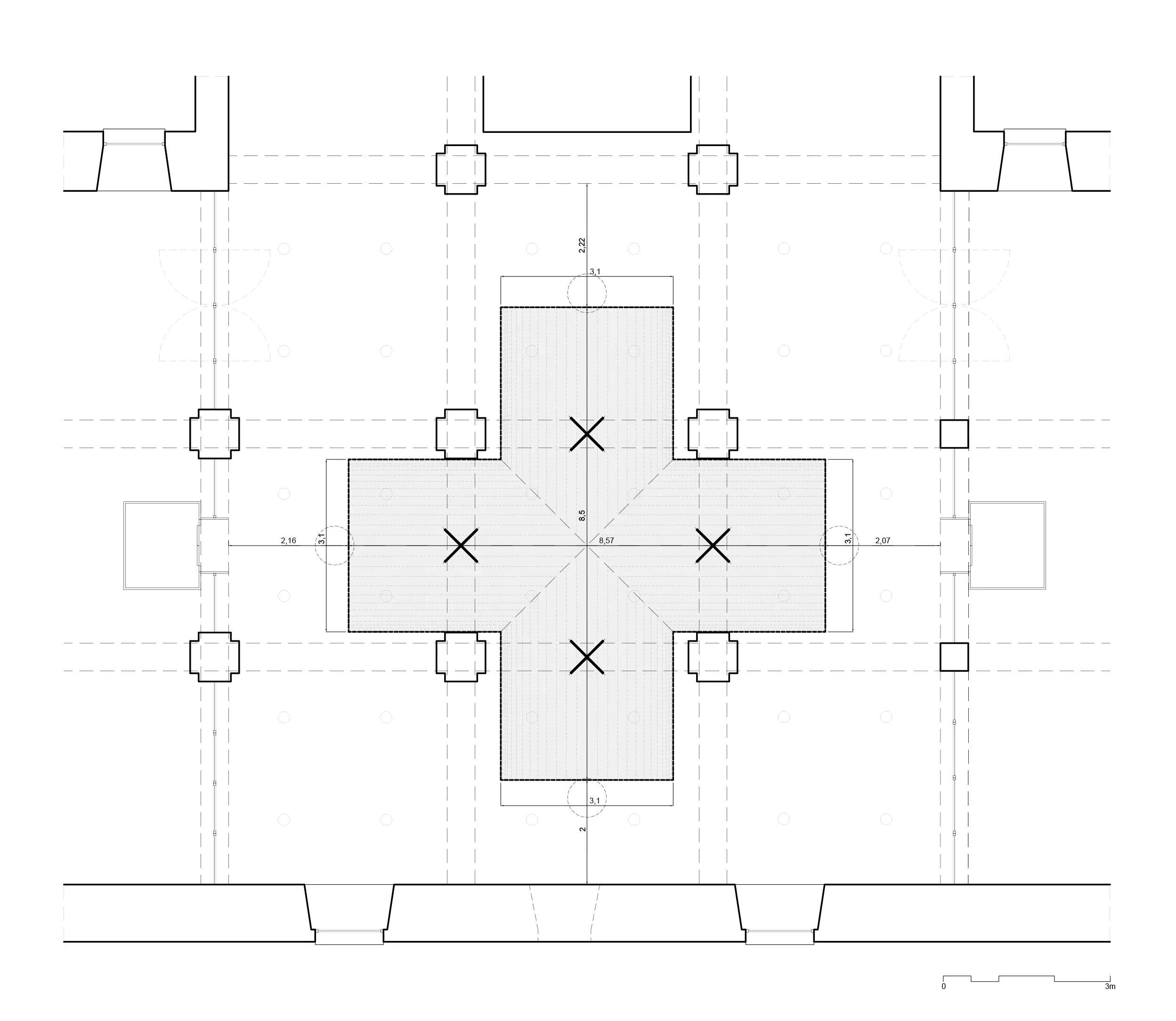
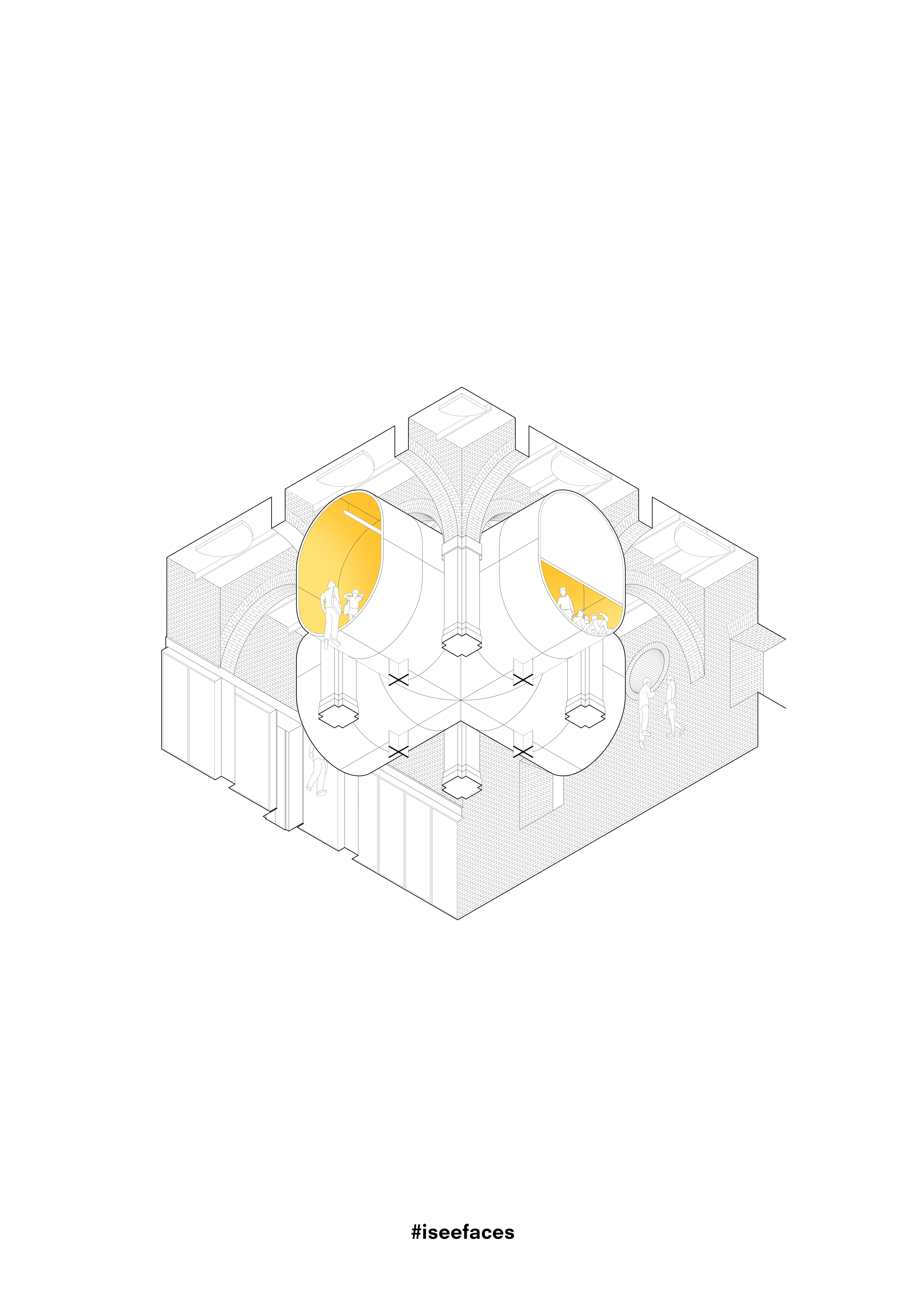
The project proposes inserting “a place within another place”: an interior landscape that, taking advantage of the existing geometric repetition, is introduced in order to tension and singularize it. #iseefaces occupies the space between the arches and the ground without touching the architecture or interfering with circulation. Like a filled mould, a cross-shaped piece made of two intersecting cylinders solidifies the void, resting only on four points aligned with the pillars. Slightly raised from the ground, it marks the threshold between the adult world and the child’s world.
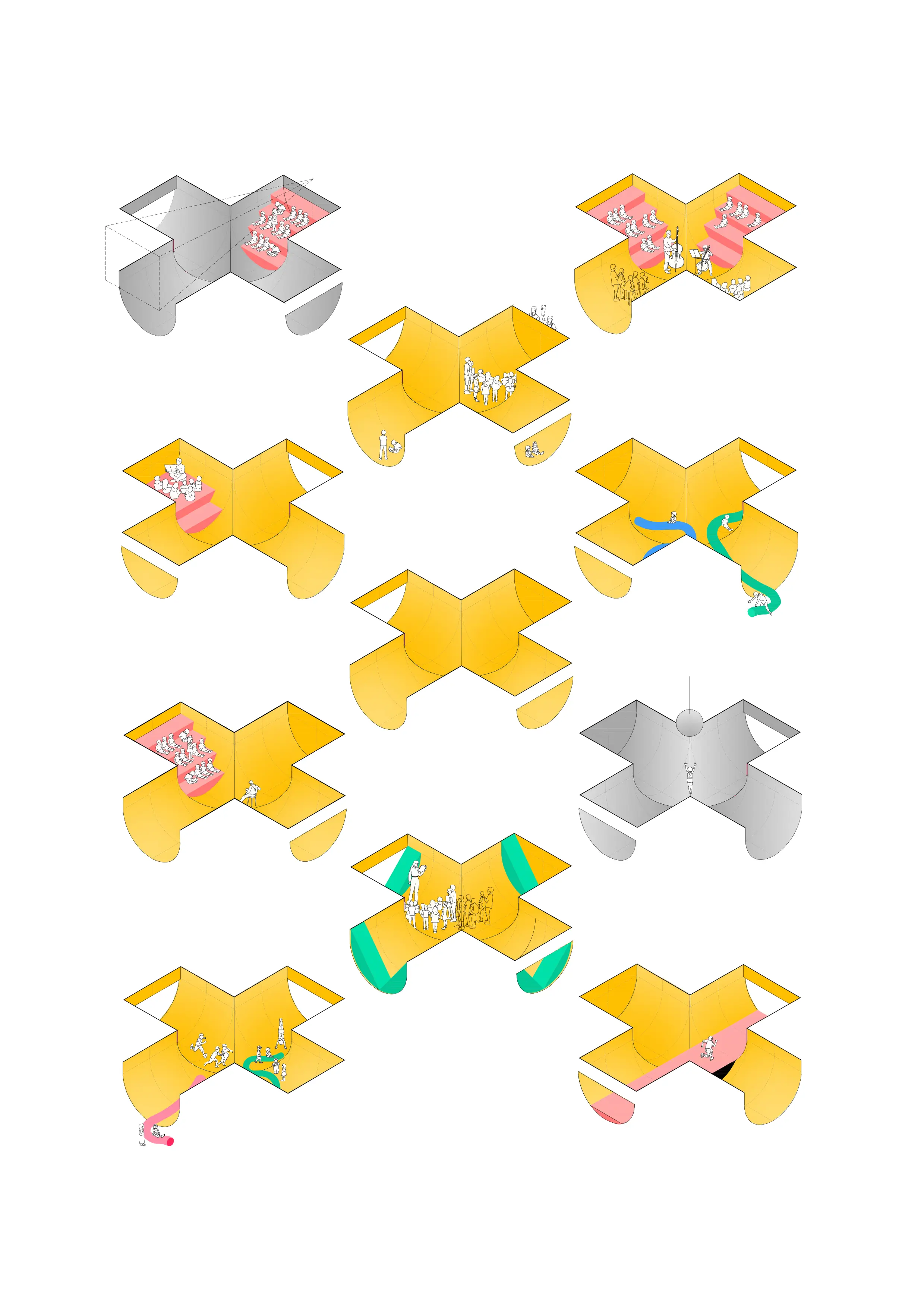
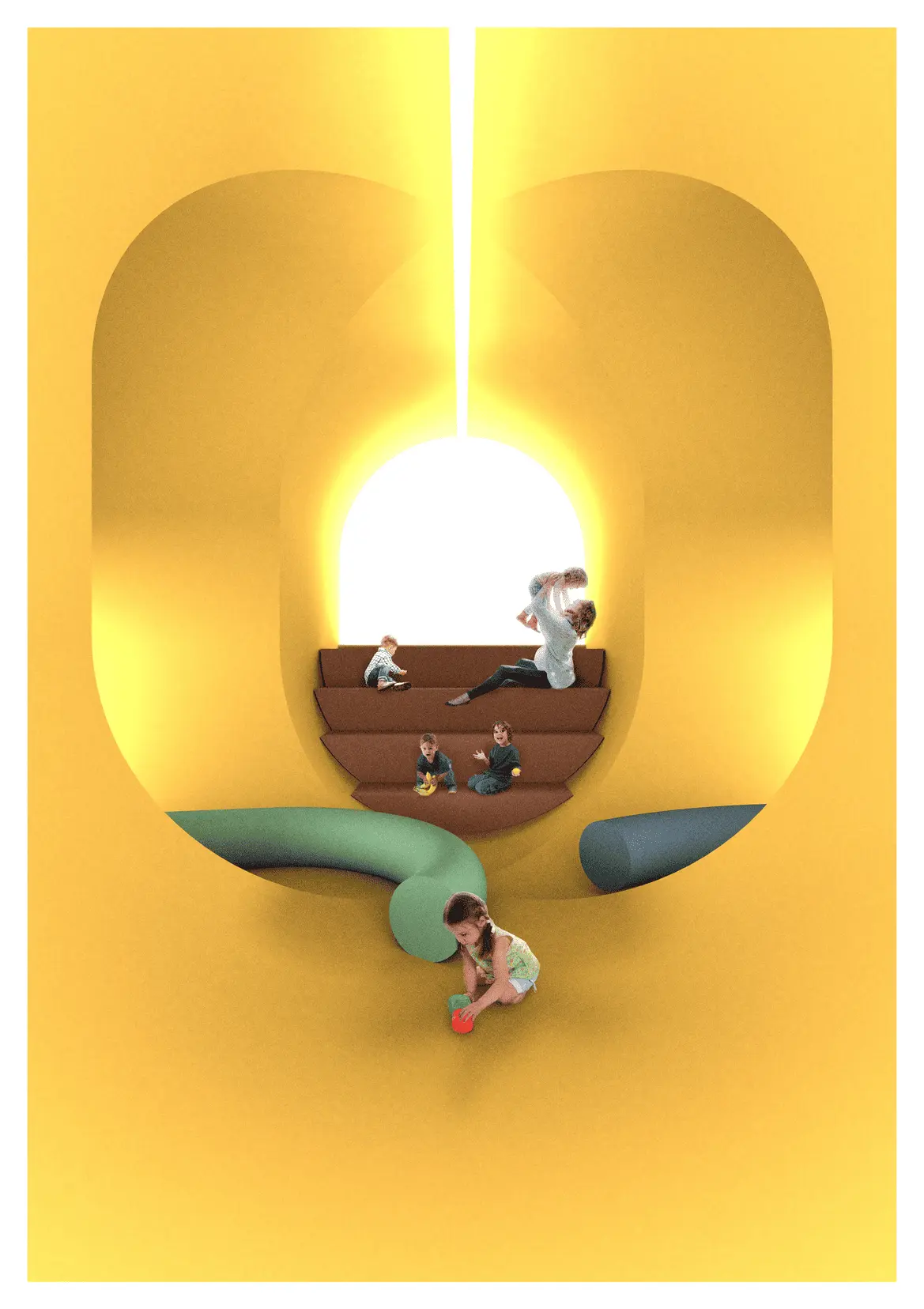
The structure, self-supporting and prefabricated in forty pieces, allows for fast and dry assembly. On the outside it is a white metal shell, cold and discreet; on the inside, a yellow, soft and welcoming space that activates the senses through contrast. Its cross-shaped scheme generates four versatile arms, articulated through soft and colorful volumes that allow multiple configurations.
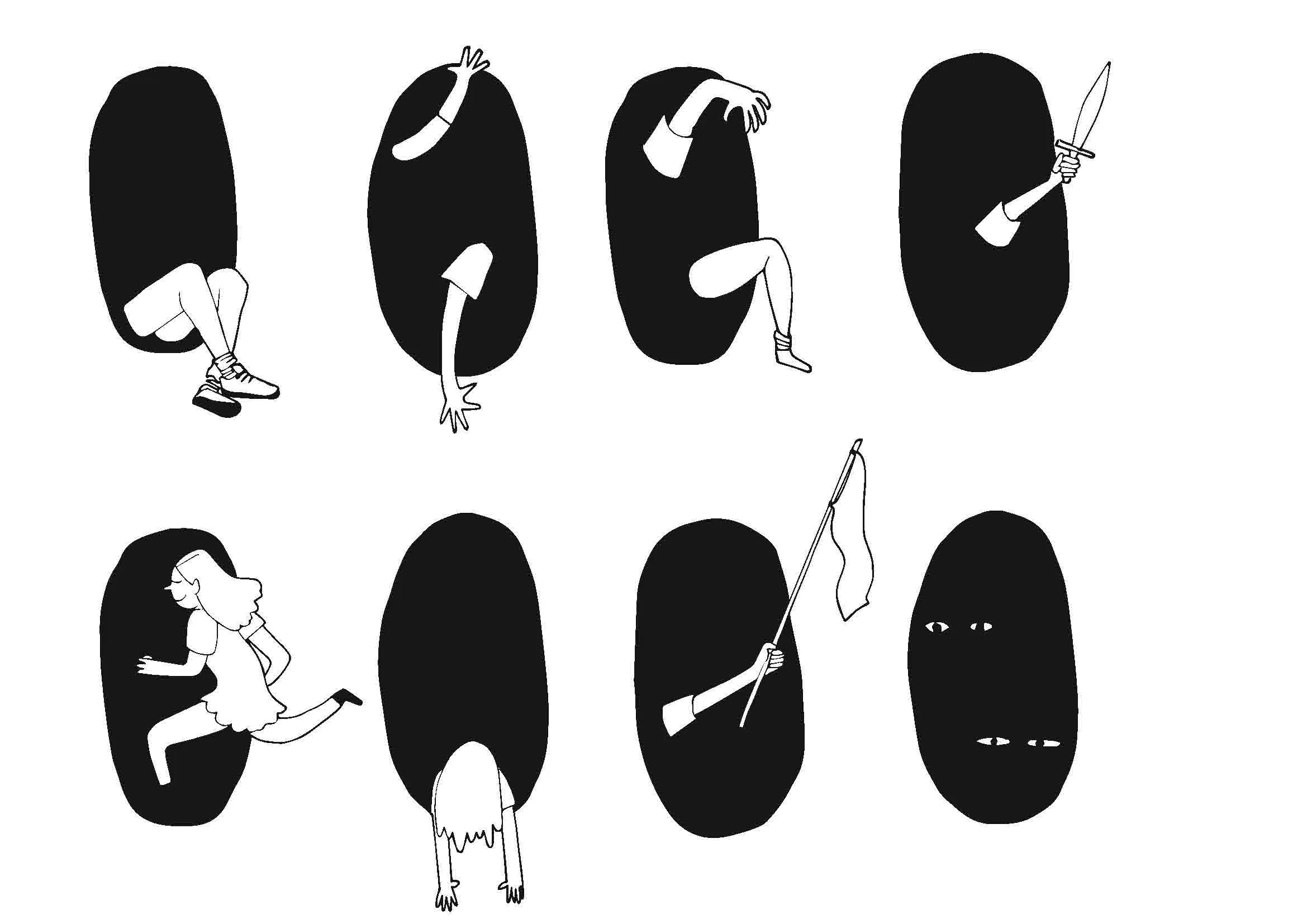
More than an object, it is a support for imagination and learning: a small Conde Duque where one can play, listen to stories, watch films or attend performances. An autonomous world fully inhabited by children, while adults observe it from outside with wonder and nostalgia.